Denali flightseeing for nervous flyers
Plenty of people who book a Denali flight have never been in a small plane, and some are quietly dreading it. The aircraft are sturdy bush planes flown by pilots who know the range well, and the operators cancel when the weather is wrong. Knowing what to expect takes care of much of the fear.
The planes you fly in
Both TAT and K2 fly single-engine, high-wing planes fitted with skis for landing on glaciers, each carrying up to 10 passengers. They are not airliners, and you feel more of the air around you. They are not fragile either. Planes of this kind have worked Alaska's mountains for decades, and the skis are there because setting down on snow is a routine part of the job.
Every passenger wears a headset, which muffles the engine and carries the pilot's narration. On K2's flights the headsets are two-way, so you can talk back. The Alaska Range is about ten minutes from the runway, so the climb out of Talkeetna, the part many people dread, is over quickly and the scenery takes over.
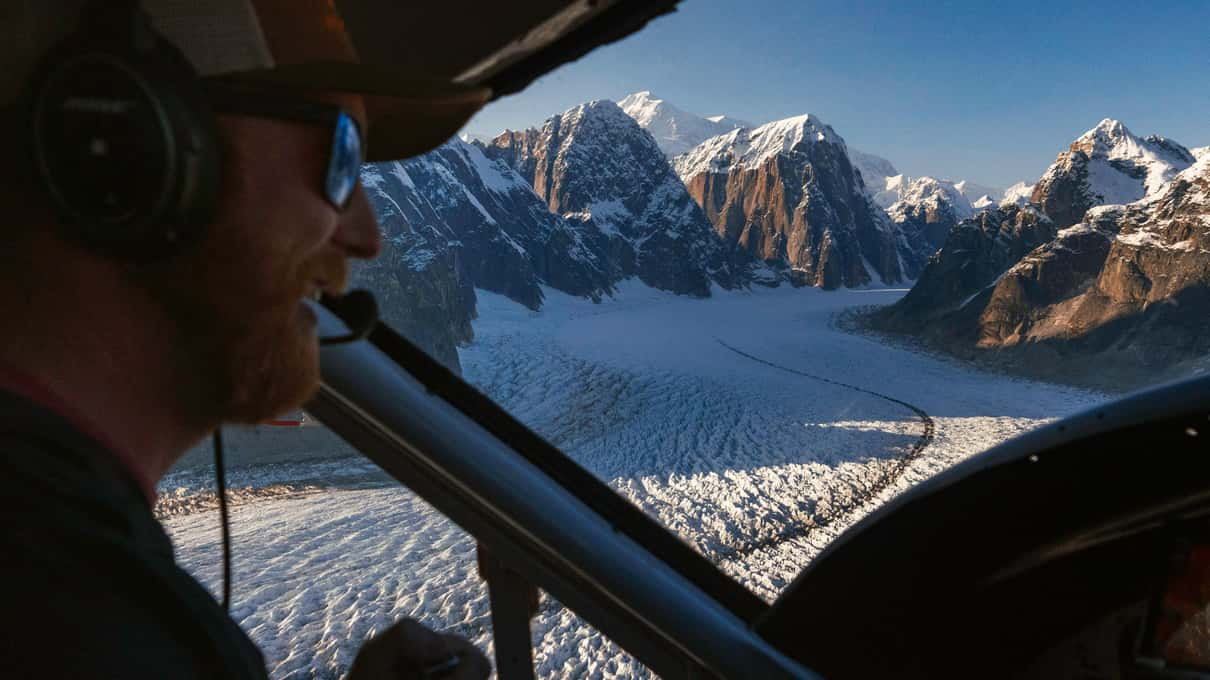
Who sits at the controls
The pilots fly these valleys day after day in season. TAT says its pilots average 12 years of experience flying in Denali National Park, a long time to learn how the wind behaves around a 20,310-foot (6,190 m) mountain. They also decide whether to fly each morning and again through the day. If TAT cancels for weather, you get a full refund.
In marginal weather TAT adjusts the price to the time actually flown and to whether a landing took place. For a nervous passenger that has a reassuring side, since the pilot can cut a flight short in rough air without leaving you out of pocket. How the weather calls work explains the system in more detail.
How the flight feels
TAT describes its flights as smooth with rare turbulence, and says most passengers need no medication. Expect a few gentle bumps on the climb and some banking as the pilot turns to give both sides of the plane a view. The banks feel steeper than they are, especially when you look straight down at a glacier.
If motion sickness is your worry, these steps help.
- Eat a light meal an hour or two before, nothing greasy
- If you use motion sickness medication, take it before check-in as the packet directs, and ask a pharmacist if you are unsure
- Look out at the horizon or a distant peak rather than down at a phone screen
- Tell the pilot early, so they can keep the turns gentle
- Choose a shorter flight for a first try, such as the Southside Explorer at ~$351, which lasts one hour
Where you sit and the weight limit
A small plane has to be balanced, so seats are assigned by FAA weight and balance rules, and TAT does not guarantee any particular seat. You may end up next to a stranger rather than your partner. Every seat has a window, so none of them is a bad one.
TAT has an individual weight limit of 375 lb (170 kg). If you are near it, contact the operator before you book rather than raising it at check-in, which is 45 minutes before the flight. A quiet message in advance spares everyone an awkward moment at the counter.
A calm start before takeoff
K2's flight with glacier landing from ~$544 begins by the fireplace with coffee or cocoa and a short flight video in K2's theater. A safety briefing follows, so you know what happens before you board. Groups are limited to 10.
Children and travelers with limited mobility
TAT flies passengers of all ages. On K2, children under 2 must sit in an FAA-approved car seat, which K2 has available on site. The booking page shows the price for each age group once you choose the number of travelers, so check the child rate there before you pay. Children are often less nervous than their parents, and a window full of glacier holds their attention well.
K2's listing says guests with limited mobility are welcome with assistance, so ask what that means for your situation. A glacier landing involves walking in snow that can reach your knees. On the three TAT flights here the landing is optional, which lets you book the flight on its own. Our glacier landing guide describes what the stop involves.
If panic sets in mid-air
Tell the pilot. The headset makes that easy, and a pilot who knows a passenger is anxious can warn you before each turn and explain the bumps as they come. It also helps to give yourself a job.
- Breathe out slowly, longer than you breathe in, for a minute or two;
- Pick a fixed point on the horizon and keep your eyes there;
- Take pictures. Framing a shot keeps the mind busy, and our photography guide gives you a plan;
- Count the glaciers as the pilot names them. The Mountain Voyager at ~$469 takes in the seven big glaciers of the south side;
- Watch the clock. The shortest flights last an hour, and most of it passes over scenery you will want to see.
Guests who were scared too
Among the reviews of K2's guided tour by air from ~$335, one guest wrote that she had been afraid of small planes and ended up loving the flight. Its one-hour Experience option makes a gentle first try while still coming within about six miles of the summit. Across the five Talkeetna listings, ratings sit at 4.8 or 4.9 from more than 650 reviews in total, including our pick, the Grand Denali at ~$586.
If you are torn between routes, our flight comparison sets out the lengths side by side, and our price guide lists what each one costs. Being warm on the glacier makes the whole day calmer, as our clothing guide explains.