Photographing Denali from a flightseeing plane
Everyone on a Denali flight gets a window, and most people come home with hundreds of frames. The keepers depend less on the camera than on beating the reflections in the window and using a fast enough shutter. A few habits make a big difference.
Every seat has a window
The planes that fly from Talkeetna are high-wing, single-engine aircraft, and every seat has a window, which is why they suit photographers so well. With the wing above you, the view downward and outward stays open, although a ski or the edge of the wing may slip into a wide frame. Some photographers like that, because it gives the scene scale and shows where the picture was taken.
You do not choose your seat. Seats are assigned by weight and balance, and K2 gives each guest an assigned window seat. Scenic pilots tend to turn the plane so both sides get a look at the main sights, so a seat on the "wrong" side costs you less than it sounds.
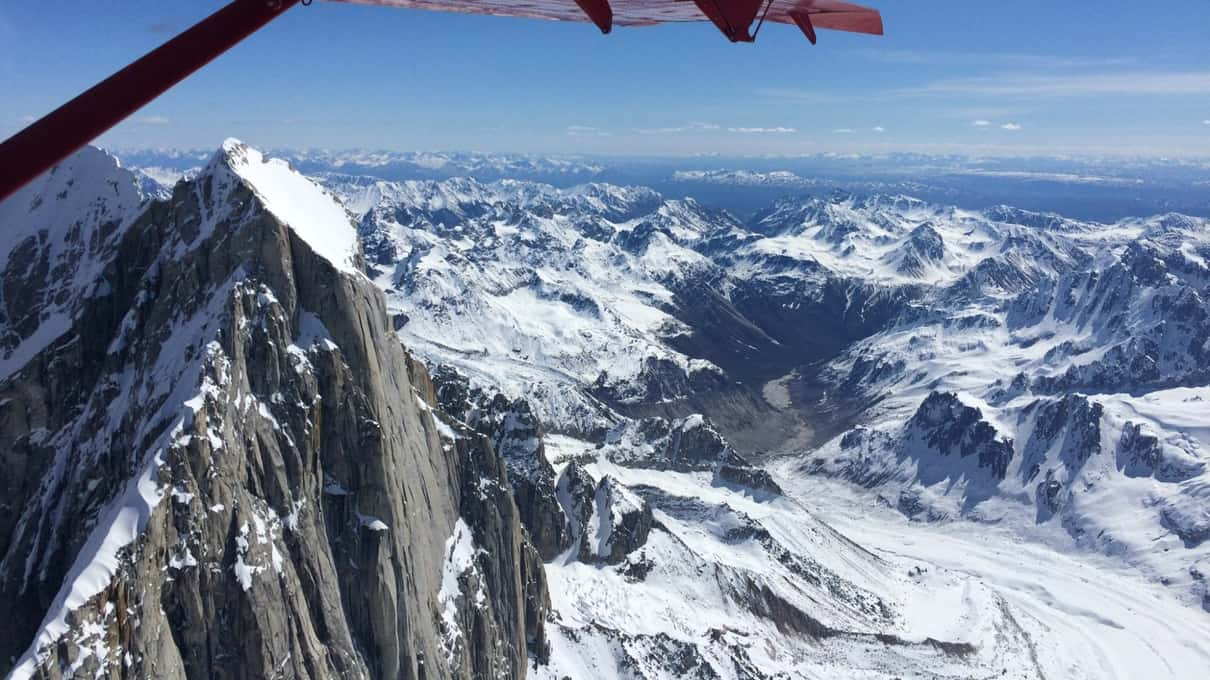
Shooting through plexiglass
The windows are plastic, slightly curved and sometimes lightly scratched. Reflections are the bigger problem, since a bright jacket or a glowing phone screen turns into a ghost in the sky. Four habits solve most of it.
- Get the lens close to the window, nearly touching but not resting on it, so engine vibration does not blur the shot;
- Turn the flash off. It lights up the plexiglass and nothing beyond it;
- Wear dark clothing, which bounces far less light back onto the window than a white or neon top;
- Shade the lens with a cupped hand or a soft rubber hood when the sun is on your side.
Shoot as straight through the window as you can. At a steep angle the curved plastic softens the image and can add color fringes. If there is a smudge in your line of sight, wipe it with a soft cloth before takeoff rather than mid-flight.
Settings for a moving plane
The plane is moving and so is your arm, so shutter speed comes first. Aim for 1/1000 s or faster, which a bright day over snow makes easy, and let the camera raise the ISO when it needs to. Use continuous autofocus with burst mode, then keep the sharpest frame of each sequence.
A wide or standard zoom does most of the work. On the K2 route the plane passes within about 6 miles of Denali's summit, and the granite walls of the Great Gorge rise a mile above the ice, so the subjects fill the frame without a long lens. A short telephoto helps for details, such as tents at the Kahiltna base camp in early summer or an icefall far below. Snow tricks light meters into gray, washed-out pictures, so dial in +0.7 to +1 of exposure compensation and check the histogram after the first few shots.
Phones on a Denali flight
A recent phone does well up here. Use the main or wide lens and skip digital zoom, which turns crevasses into mush. Tap to focus on the mountain rather than the window, and lock the exposure if the phone keeps brightening for the dark edge of the cabin. Switch the flash off before you board.
Short video clips of the Great Gorge, or of the approach to the Wickersham Wall on the longest flights, often tell the story better than stills. The pilot's narration comes through your headset and not the phone's microphone, so the clips will carry engine noise instead of commentary. Panorama mode rarely works from a moving plane. Take a few overlapping frames instead and stitch them at home.
More air time, more angles
TAT's Mountain Voyager from ~$469 flies for 75 minutes and adds the west faces of Denali to the Southside route. More minutes in the air mean more chances for the pilot to find a clear face.
Photos on the glacier landing
The landing is where most of the favorite pictures come from. You get about 20–30 minutes on the snow, enough for the classic frame of the plane parked on the ice under the peaks plus a group photo, with time left over to put the camera away and look. People standing beside a ski plane give the mountains a sense of size that aerial shots lack.
Bright snow with a high sun makes for squinting faces, so turn your subjects with the light to one side. Keep spare batteries warm in an inner pocket until you step out. Our glacier landing guide covers the rest of the stop, and what to wear keeps your fingers working on the ice.
Light and time of day
Weather decides more than the clock. A clear sky at 1:30 pm beats a cloudy evening, and Denali makes its own clouds, so take the first clear slot you can get. How the daily weather calls work explains why.
When you do have a choice, the ends of the day give softer light, with longer shadows that show the texture of the ice. In summer TAT flies at 8:30 am and 4 pm among other times, and from June 2 to September 7 it adds a 6:30 pm departure. On a clear evening in late summer that last flight can catch alpenglow, the pink and orange light on the high snow as the sun drops. Around midsummer the sun sets so late that the glow comes long after the last plane is back. Winter flights leave at noon with the sun low in the south, which means long shadows all day. Our season guide has the month-by-month picture.
Which flight gives you the most to shoot
Longer flights mean more subjects, though even the shortest one covers the Great Gorge. The Southside Explorer at ~$351 spends an hour over the Ruth Glacier and the Don Sheldon Amphitheater. Our pick, the Grand Denali at ~$586, adds a crossing to the north side and the Wickersham Wall, weather permitting, a view the shorter flights never reach. The K2 Denali flight with glacier landing at ~$544 passes Mt. Foraker and Mt. Hunter before setting down on the snow. Which flight suits you compares the routes in detail.
Drones are banned on every flight, so leave yours behind. If you caption your pictures, the mountain's official federal name became Mount McKinley again in 2025, while the park is still Denali National Park and Preserve and many Alaskans keep saying Denali. And if a small plane makes you uneasy, focusing on the viewfinder calms many people down. Our guide for nervous flyers has more ideas.